Hadlow Primary School
Science
"It was fun and interesting when we learnt about teeth, diet and animal adaptations. We questioned, discussed and investigated further." Robyn
Intent: What is our Science curriculum vision?
At Hadlow Primary School we facilitate an enriching, inclusive science curriculum. Underpinning all lessons, we question, investigate and explore; creating a culture of critical thinking and resilience. We make links within and across subjects; building curiosity, enthusiasm and awareness of science in daily life, within our community and through different career paths. Making connections through the natural and physical world, we develop a clear understanding of how science relates to our lives.
By building upon prior knowledge, and by using retrieval strategies, we ensure that children have a conceptual understanding and have the opportunity to explore and develop their sense of scientific enquiry.
The National Curriculum for Science aims to ensure that all pupils:
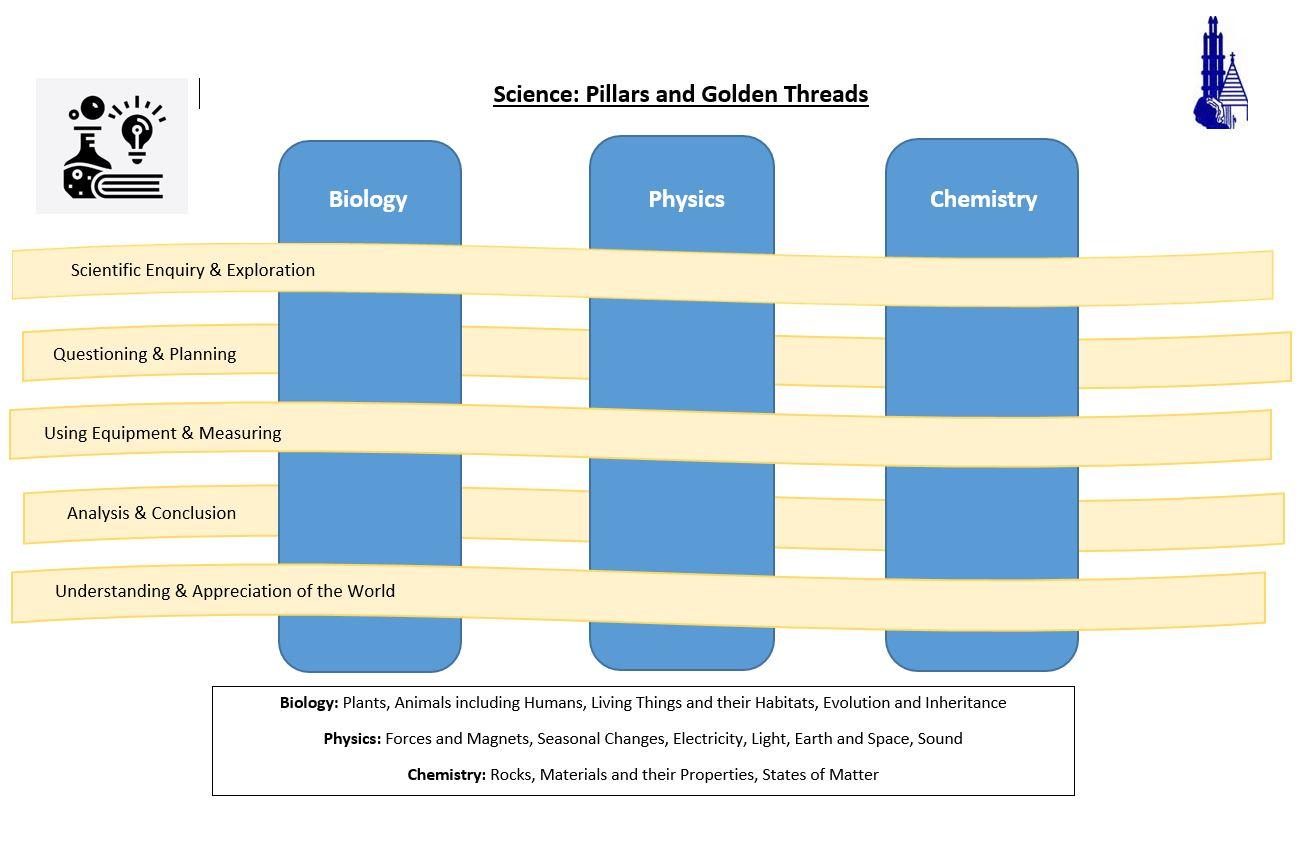
- develop scientific knowledge and conceptual understanding through the specific disciplines of biology, chemistry and physics
- develop understanding of the nature, processes and methods of science through different types of science enquiries that help them to answer scientific questions about the world around them
- are equipped with the scientific knowledge required to understand the uses and implications of science, today and for the future
"Science is my favorite subject because I like exploring, experimenting and learning something new every time! I loved our rocket experiments in Year 5!" Leo
Implementation: What does Science teaching and learning look like across the school?
The National Curriculum is our starting point for Science and determines the knowledge and skills that children need to learn. We follow Kapow’s scheme of learning for Science, which supports us in delivering a broad, balanced and progressive curriculum. Science is taught weekly through carefully sequenced topics and lessons. We also have flexibility within our timetable, allowing us to extend Science learning into a full afternoon or day where appropriate. This provides valuable opportunities for children to explore, question, investigate and develop their learning in greater depth.
In EYFS, Science begins through ‘Understanding the World’ in Apple Class. Children are encouraged to be curious about the world around them, ask questions, explore their environment and develop a sense of wonder.
Key scientific knowledge is taught through specific topic areas, with important concepts revisited as children progress through the school. Opportunities for retrieval are built into learning so that children can recall prior knowledge and make connections with new concepts. Scientific skills are developed progressively, with a strong focus on the five main areas of scientific enquiry.
Scientific vocabulary is a key priority and is evident within classroom environments, displays, children’s books and discussions. Teachers explicitly model and teach new vocabulary, enabling children to use increasingly accurate scientific language when explaining their ideas and findings.
Practical investigation is an important part of our Science curriculum. Where appropriate, teachers model experiments and scientific processes before children have opportunities to apply their learning through investigations and progressively challenging practical activities. Children are encouraged to ask their own questions, make predictions, observe carefully, record findings and draw conclusions from their results.
All children are supported and challenged appropriately. This may include pre-teaching, visual and practical resources, small-group learning, adult support, targeted questioning and adapted activities or outcomes. Children are also given opportunities to lead learning, present their findings and investigate scientific questions in greater depth.
Wherever possible, we connect Science learning to the wider world. Children learn about significant scientists, STEM careers, current events and global issues, while links with other curriculum subjects help them to make meaningful connections across their learning.
Each year, we hold a dedicated STEM Week to celebrate Science, Technology, Engineering and Mathematics. This provides children with opportunities to experience the breadth of STEM, take part in practical challenges and investigations, explore different STEM careers and understand how these subjects are used in everyday life and the wider world.
Outdoor learning is also an important part of Science at Hadlow Primary School. We are fortunate to have a wonderful outdoor environment, including an allotment, wildlife area and nature pond. These spaces provide valuable opportunities for first-hand observation, investigation and exploration, helping children to develop their scientific knowledge and curiosity through experiences in the natural world.
Impact
Impact
The impact of our Science curriculum is that children develop a secure and progressive understanding of scientific knowledge and concepts, alongside the skills needed to work and think scientifically. Children are able to build upon prior learning, make connections between different areas of Science and apply their knowledge to new situations.
Through regular opportunities for practical investigation and scientific enquiry, children become increasingly confident in asking questions, making predictions, planning and carrying out investigations, observing and measuring, recording results and drawing conclusions. They learn that Science is not simply about knowing facts, but about being curious, investigating ideas and using evidence to explain their thinking.
Children develop and confidently use a wide range of scientific vocabulary. They are able to discuss their learning, explain scientific concepts and communicate their findings in increasingly precise and appropriate ways.
Our curriculum aims to foster a genuine curiosity and enthusiasm for Science. Children understand how Science connects to their everyday lives and the wider world, and they develop an awareness of scientists, STEM careers and the important role that Science, Technology, Engineering and Mathematics play in society.
Through practical experiences, STEM opportunities and the use of our outdoor environment, children develop independence, resilience, collaboration and problem-solving skills.
By the time children leave Hadlow Primary School, our aim is for them to be curious, confident and enthusiastic young scientists who have the knowledge and skills required for the next stage of their education and an understanding that Science can help them question, explore and make sense of the world around them.
- Assessment tasks range from verbal questions and response, to ‘low stakes’ quizzes and posters, to retrieval grids and end of topic mini tests
- Assessment is used as a tool to adapt and improve planning (support and challenge)